


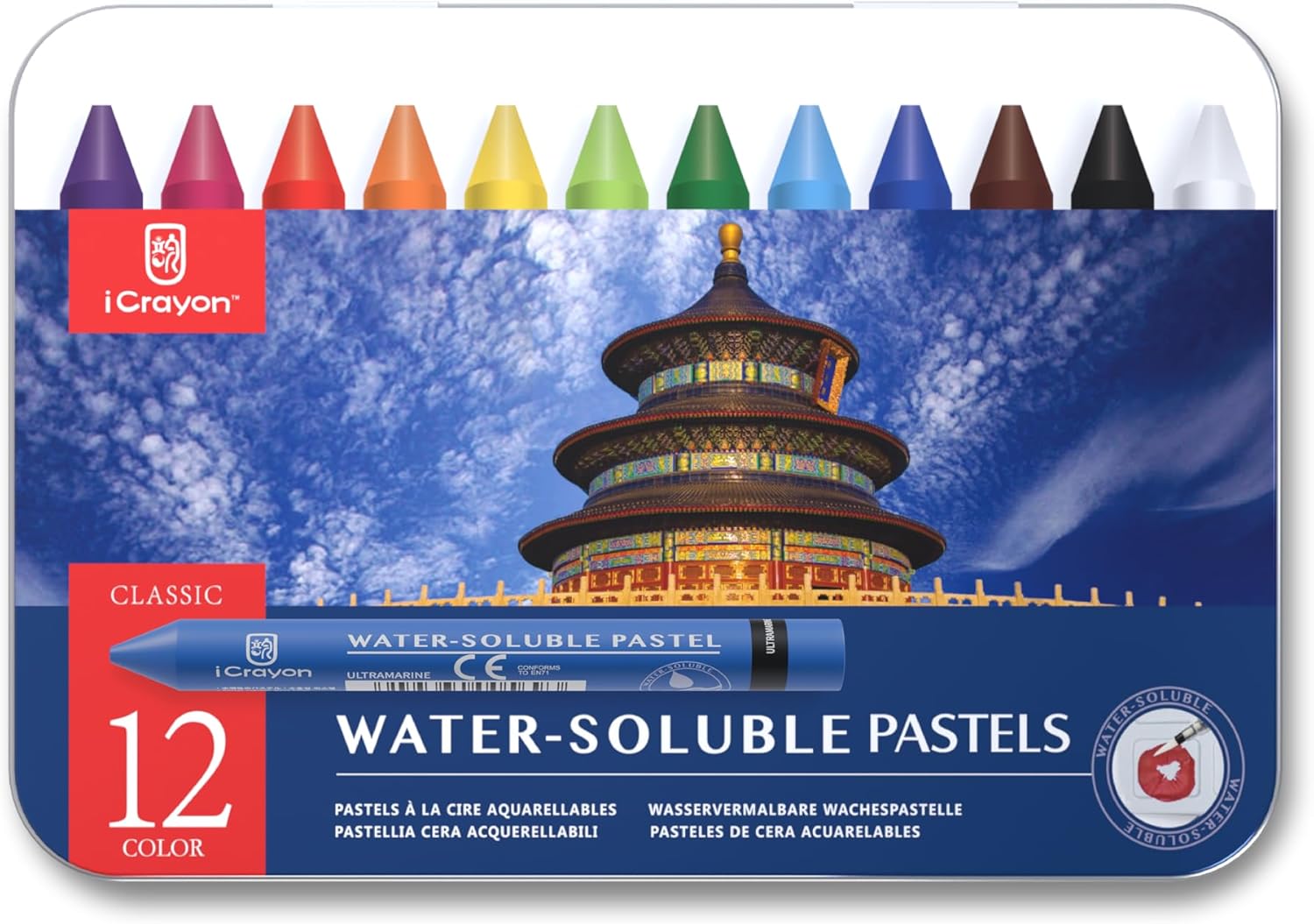
Water-soluble pastels are drawing sticks that can be used dry or activated with water for painted effects. Draw directly on paper, then use a damp brush to soften selected marks into washes. You can keep crisp lines and fluid color in the same artwork.
A line can become a wash. A patch of color can become the beginning of a landscape. The easiest way to discover this material is with a small test sheet, not a complicated finished painting.
How do water-soluble pastels work?
Water moves color from the marks you have made, but the amount of movement varies with the formulation, paper, pressure and water on your brush. Some original marks may remain visible. Use that texture for a hillside, a flower stem or the edge of a building.
Water-soluble pastels are not interchangeable with every oil pastel or dry soft pastel. Check that your set is specifically labeled water-soluble before trying wet techniques.
What do you need to begin?
- Water-soluble pastels.
- Paper suitable for wet media, such as watercolor paper.
- A brush or water brush and clean water.
- A cloth or paper towel for controlling moisture.
- A mixing palette if you want to prepare color before applying it.
Check the contents of your selected set before buying additional tools. Keep a scrap of the same paper beside your project for testing.
Make a three-part test sheet
- Dry marks: draw several lines and a small patch. Vary the pressure and notice how much paper remains visible.
- Lightly brushed marks: make another patch and pass a damp brush through one side. Leave the other side dry for comparison.
- A diluted mixture: prepare a little color on a compatible palette, add water gradually and brush a separate swatch.
Label the colors and allow each sample to dry. This small reference tells you more about your materials than judging a color from a screen.
Try a simple leaf project
Draw a leaf with light pressure. Add a second color along one edge, then use a damp brush to move some color toward the center. Leave part of the outline untouched. Let the paper dry before testing another layer or adding a few vein details.
Begin with less water and increase it gradually. Rinse the brush between colors when you want to keep mixtures distinct. A page of small experiments is a useful first result.
Frequently asked questions
Can you use water-soluble pastels without water?
Yes. Dry drawing is one way to use them. Introduce water only where you want a different edge or painted passage.
Do you need watercolor paper?
For wet techniques, choose paper intended for wet media. Thin drawing paper may buckle or deteriorate when wet. Test your chosen surface first.
Should every mark dissolve completely?
No single result applies to every formulation. Color may move while some original texture remains; pressure, paper and water all affect the outcome.
Explore the materials
View Water Soluble Pastels for current options, contents and product-specific instructions.
Continue learning
- Six Ways to Create with Water-Soluble Pastels
- A More Controlled Way to Mix Color with Water-Soluble Pastels
By iColorLab Editorial · Published September 7, 2026. Product options and instructions may change; check the selected set before use.