


More controlled color mixing starts with a repeatable process: prepare a small amount of material, add water gradually, test on the same paper and record the dried result. A palette organizes that process; it does not automatically measure pigment or guarantee an exact color match.
Discovering a color you love is satisfying. Knowing how you approached it makes the next painting easier to plan. Treat the pastel, preparation tools, palette, water and test sheet as one connected painting system.
1. Prepare only what you need
Use the tools and preparation surface intended for your particular set. Keep small amounts of each color separate before mixing. Contain shavings and avoid blowing loose material into the air.
If your palette includes different preparation textures, test them side by side on the same paper. Record the surface and method you used. Do not assume that a coarse or fine surface alone determines the final wash.
2. Build the mixture gradually
Place a small amount in a mixing well. Add a little water, work the mixture with the brush and make a test stroke. Add the second color in small increments, testing as you go. Keep a separate clean area for a new mixture so old residue does not change it unintentionally.
Before adding more material, ask what needs to change: the hue, the concentration or the amount of water. Adjusting one thing at a time makes the result easier to understand.
3. Give the grid a clear job
On a palette with a numbered grid, use the cells as visual reference points for organizing trials and matching them to notes. For example, record a blue-green study as A1 in your notebook and keep its dry swatch beside the recipe.
A marked grid is not a scale: equal-looking areas do not necessarily contain equal amounts of material. For useful comparisons, keep the collection method, water tool and test surface consistent.
4. Record a useful color recipe
- Product and color names or numbers.
- Preparation tool or area used.
- Approximate amounts and how you collected them.
- How you added water, using the same tool between trials.
- Paper type and a dried physical swatch.
- One observation and one adjustment to try next.
If you count drops, use the same dropper for comparisons. Drops from different brushes or dispensers are not a universal measurement.
5. Compare the dried samples
Judge the mixture after your sample has dried. Keep the physical sample: lighting and screens can change how a photographed color appears. Build a small library of useful greens, muted violets, warm neutrals and pale sky mixtures.
The goal is less guesswork and a better record of your decisions, not a promise that every attempt will be identical.
Frequently asked questions
Does a grid palette guarantee precise color ratios?
No. A grid can organize experiments, but it does not measure mass or water volume. Consistent preparation and written notes are what make your trials easier to compare.
How much water should I add?
There is no single amount for every color and effect. Begin with a small amount, test the mixture and increase gradually while recording your method.
Does every iCrayon set include the same palette?
Check the selected product and set contents. Palette design and accessories can vary; use the instructions for the set you receive.
Explore the materials
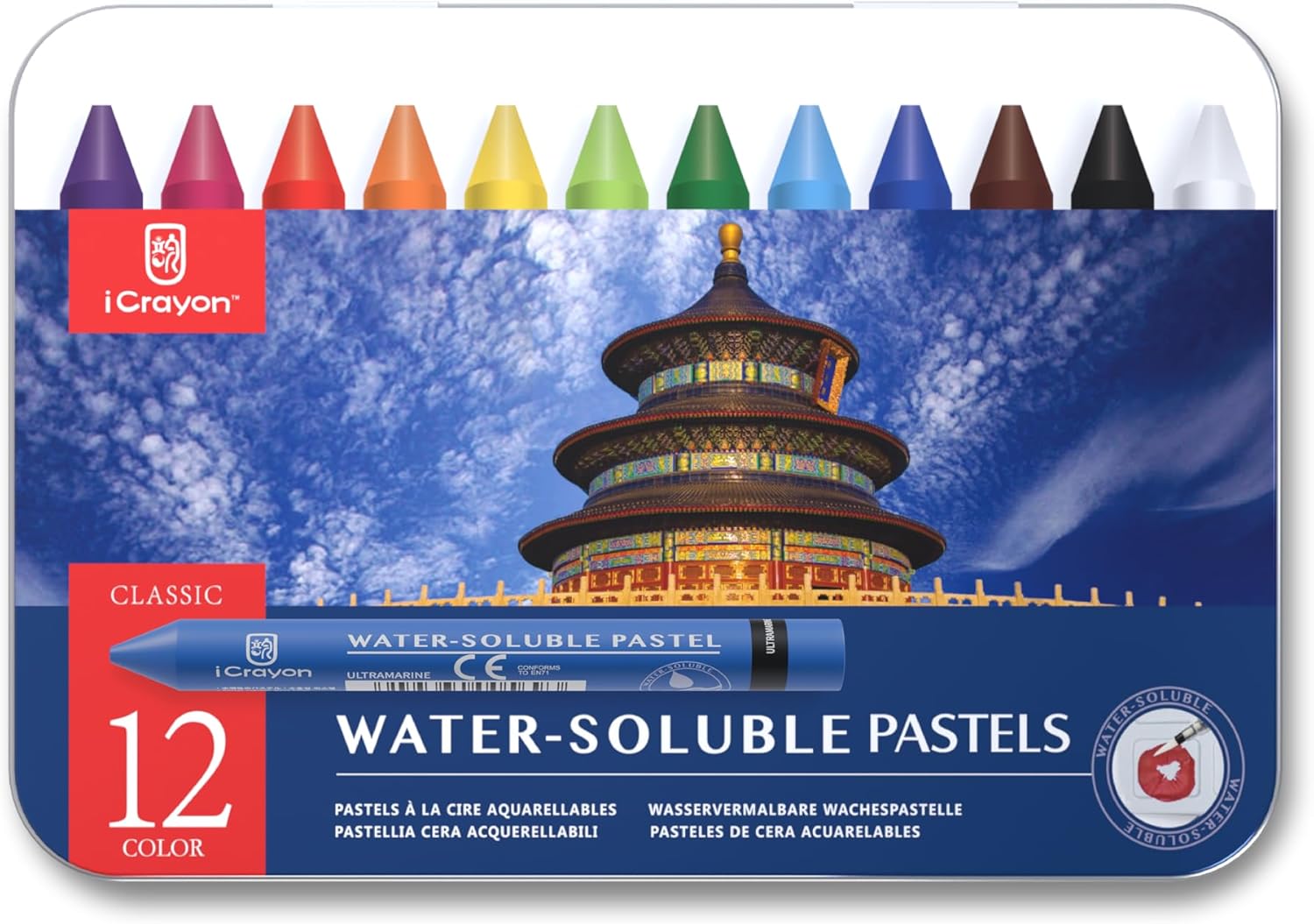
View Water Soluble Pastels for current options, contents and product-specific instructions.
Continue learning
By iColorLab Editorial · Published September 7, 2026. Product options and instructions may change; check the selected set before use.