


Start learning oil pastels with three simple exercises: a pressure scale, two colors layered in both orders and a small blended transition. These show how your sticks behave on your chosen surface before you begin a larger artwork.
A few colors and a sheet of suitable paper are enough. Keep a scrap for tests and a cloth or paper towel for cleaning the outside of a stick between colors.
Choose a manageable starting palette
Pick a light color, a dark color and a few colors you enjoy. A limited selection helps you notice pressure and layering instead of continually searching for another shade. Follow the paper or surface recommendations for your set.
Make a pressure scale
Draw three patches using light, moderate and firmer pressure. Notice the amount of paper showing through and the feel of each mark. Repeat with another color. Use controlled pressure rather than forcing the stick.
Light initial layers give you room to explore. Covering the paper heavily at the beginning may change how much additional material the surface accepts.
Try layering in both orders
Place one color lightly on the paper and draw a second color across part of it. In another sample, reverse the order. Label both studies. The upper layer, pressure and surface texture all influence what you see.
Keep an uncovered patch of each original color nearby so you can compare the layered area with the starting colors.
Blend selectively
Put two colors next to each other, then overlap their edges with small strokes. Start with a narrow transition instead of blending the whole drawing. If you use a blending tool, test its effect first and clean it between colors.
You can leave visible marks beside a blended passage. Different edges often make a drawing more interesting than smoothing everything equally.
Choose a format for your marks
A larger stick can suit broad coverage, while a more compact format may be convenient for smaller studies. Compare actual dimensions and the marks you want to make rather than assuming one size is best for everyone.
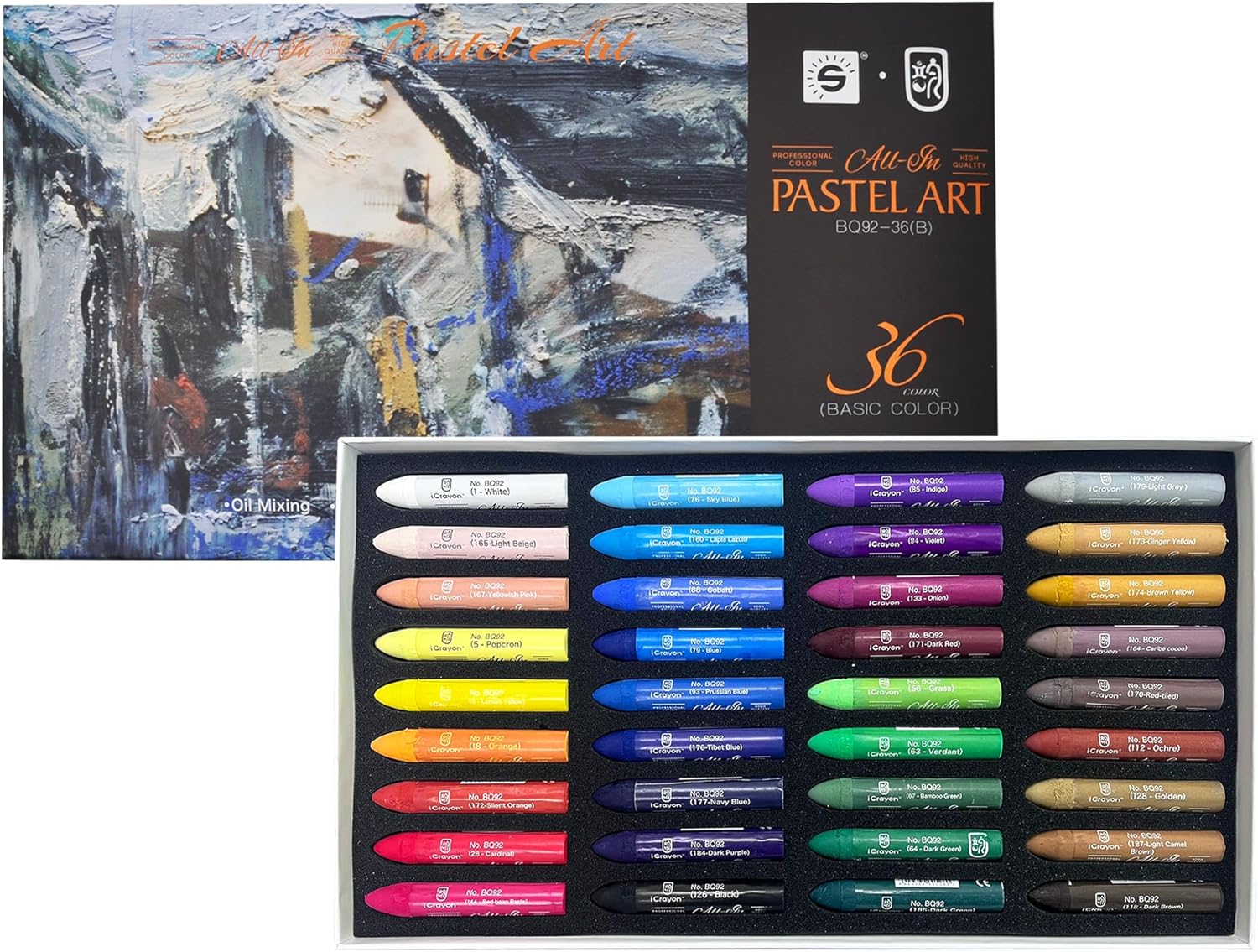
Explore the iCrayon Professional Oil Pastels Set and the Jumbo Oil Pastels Set to compare the available formats.
Finish a small fruit study
Choose one piece of fruit against a simple background. Block in its main shape lightly, place the shadow and reserve a lighter area. Add a few stronger marks only where needed. Store the finished piece so its surface does not rub against other work.
Frequently asked questions
Do beginners need a large color set?
No. A small selection is enough to practice pressure and layering. Add colors as your projects call for them.
Can I turn ordinary oil pastels into watercolor with water?
Do not assume oil pastels are water-soluble. Use a product specifically labeled water-soluble for water-activated techniques.
Why test on the same paper as the artwork?
Paper texture affects coverage and layering. Using the same surface makes a test more useful for the finished project.
Explore the materials
View Professional Oil Pastels Set for current options, contents and product-specific instructions.
Continue learning
By iColorLab Editorial · Published September 7, 2026. Product options and instructions may change; check the selected set before use.